The Cold War Era in Berlin: Where to Learn More About Divided Germany
Berlin is jam-packed with history — from the era of the Prussian kings to World Wars I and II, and, of course, the Cold War. No visit to Berlin is complete without seeing part of the Berlin Wall. But what exactly was the Berlin Wall? How did it divide the city? And where can you still see it today?
If you’d like to learn more about the Berlin Wall, why not book a custom tour with a focus on the Cold War? You’ll discover how and why the wall was constructed and hear thrilling escape stories. It’s the best way to learn about the division of Germany.
Why was the Berlin Wall built?
The Berlin wall was built to separate East and West Germany, but mostly to keep East Germans in East Germany and to stop them from fleeing to the west.
At the end of World War II, Germany was divided into four occupation zones, one for each main Allied victor: France, Britain, the United States, and the Soviet Union (see image 1). This occupation aimed to help Germany rebuild because the country had suffered significant damage. In Berlin alone, 80% of the buildings were damaged. The overall goal was to stabilise, disarm, and restructure Germany after the Nazi regime. However, the occupation became more entrenched as the Cold War broke out between the United States and the Soviet Union.
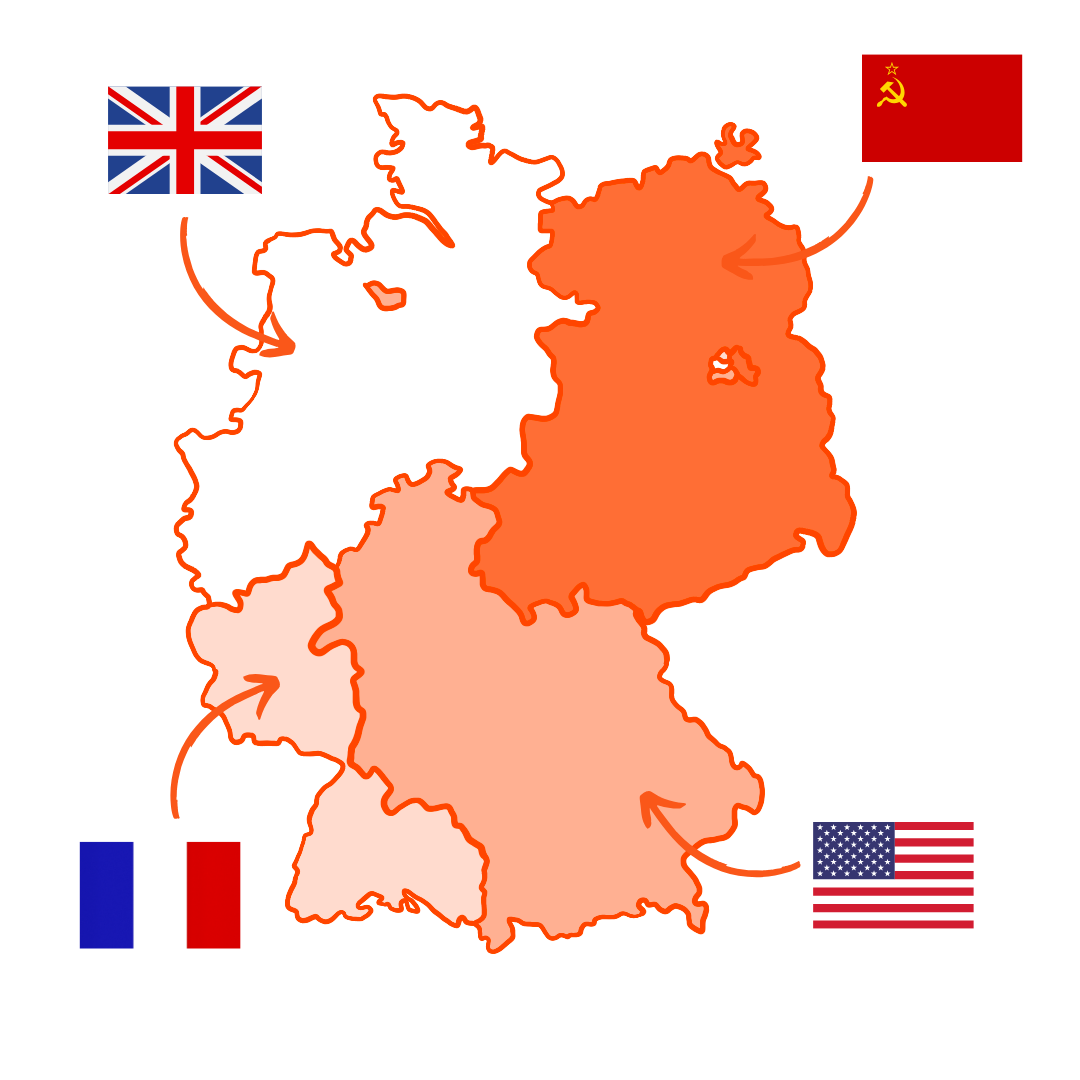
Image 1: How Germany was divided after WW2
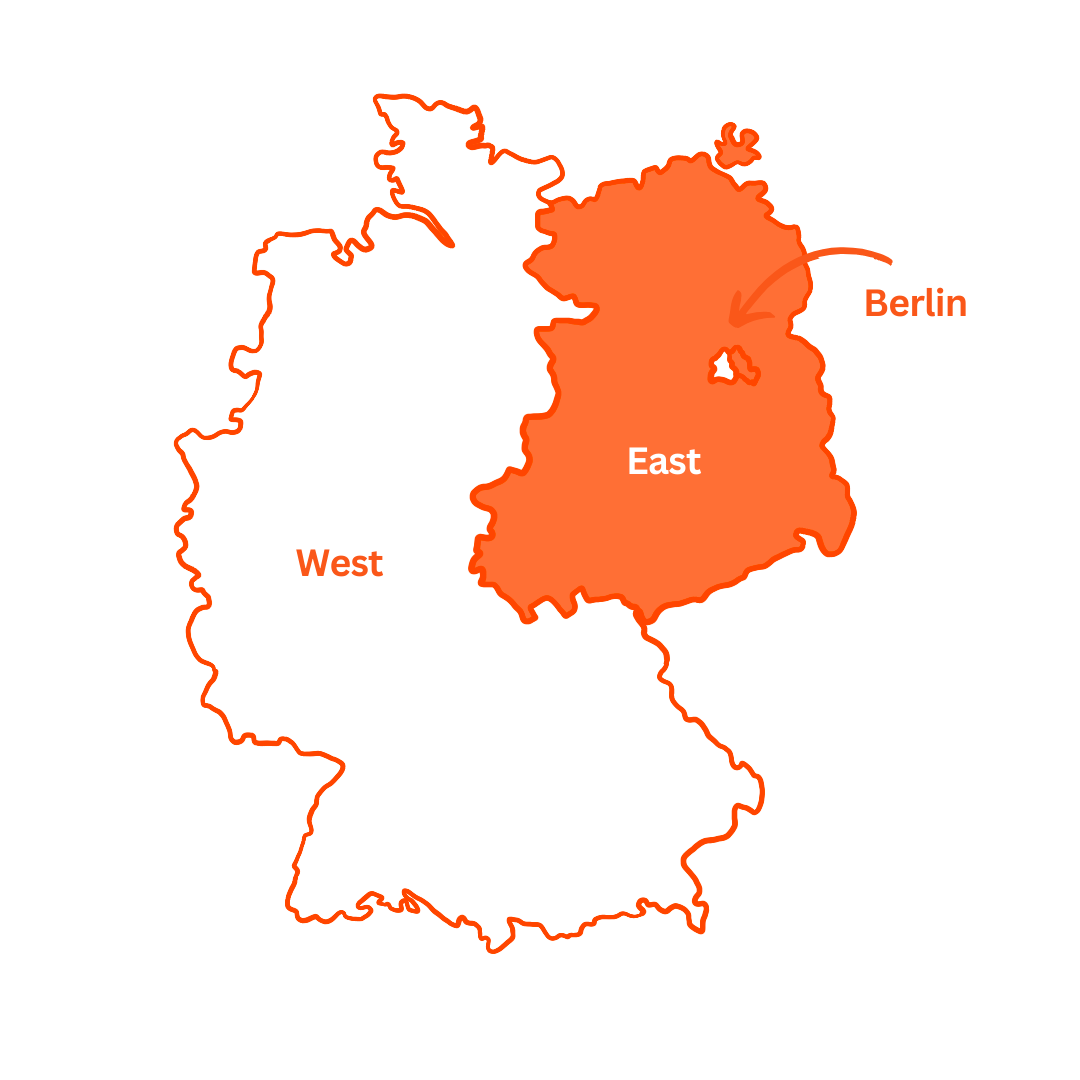
Image 2: East and West Germany
In 1949, the British, French, and Americans joined forces to establish the Federal Republic of Germany (informally known as West Germany). The Soviets declared their territory the German Democratic Republic (commonly referred to as the GDR or East Germany) (see image 2).
Life in East and West Germany was starkly different. Each had its own political, social, and economic systems. The West was democratic and capitalist, while the East was a socialist dictatorship. To complicate matters further, rebuilding efforts after the war varied greatly between East and West.
In the 16 years between the end of World War II and the construction of the Berlin Wall in 1961, approximately 3.5 million East Germans fled to West Germany. One of the most common methods of escape was simply crossing from East Berlin into West Berlin. To halt this flow of people and keep citizens within the GDR, the government erected a border wall in Berlin.
If you’d like to learn more, I wrote here about how the wall was built.
What Was the Berlin Wall?
The Berlin Wall was a 3.6-meter-tall, prefabricated concrete barrier designed to stop East Germans from entering West Berlin and thus fleeing the GDR.
However, it wasn’t just a single wall. To prevent escapes, two walls were constructed with a stretch of land in between known as the ‘Death Strip.’ This Death Strip contained watchtowers, which were manned 24/7 by East German border guards, as well as electric fences, trip wires, guard dogs, mines, and various other obstacles intended to slow down potential escapees.
Quick Facts About the Berlin Wall
- Built overnight: Construction began between August 12 and 13, 1961. It went up so quickly because the first version was a simple 1-meter-high barbed-wire fence.
- Continuous expansion: From the moment it was erected in 1961 until it fell in 1989, the GDR kept adding new obstacles and “improvements”.
- Height and length: In its final form, the Wall stood 3.6 meters high and stretched 155 kilometers around West Berlin.
- Escape attempts: During its 28-year existence, there were over 100,000 escape attempts.
- Casualties: Sadly, 136 people lost their lives trying to flee East Germany.
Where to learn more about the Berlin Wall?
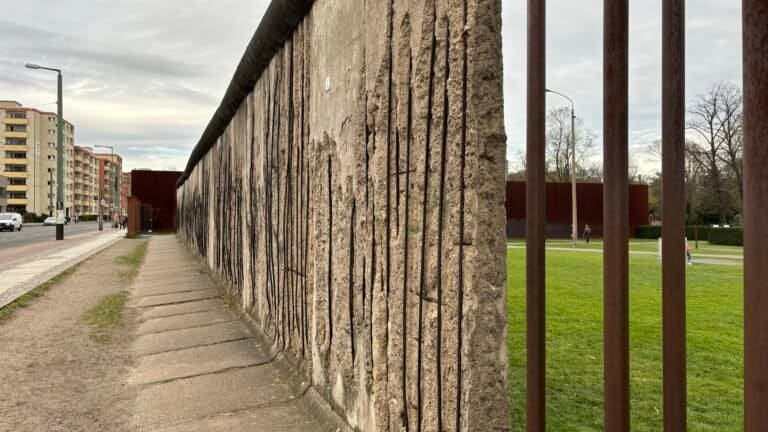
My favourite place to learn about the Berlin Wall is the Berlin Wall Memorial on Bernauer Strasse. This excellent (and free) museum details the Wall’s construction and demolition and shares numerous escape stories.
The Berlin Wall Memorial also features a reconstructed section of the Death Strip and several original wall segments.
And of course, we can create a custom walking tour of Cold War-era Berlin. I’ll share the best stories and take you to the remaining segments of the Wall along Bernauer Strasse.
Where to see the Berlin Wall today?
Berlin is dotted with locations where you can still see remnants of the Wall and old watchtowers. Some of my favorite spots include:
- Berlin Wall Memorial
- East Side Gallery
- The stretch of remaining Wall near the Topography of Terror (about a 3-minute walk from Checkpoint Charlie)
- The watchtower near Potsdamer Platz
If you want to delve even deeper into Cold War history, I highly recommend:
- The Memorial Günter Litfin, dedicated to victims of the GDR border troops and housed in a former guard tower.
- The Tränenpalast (’Palace of Tears’) a free exhibition depicting life at the border crossing.